‘If we are going to sin, we must sin quietly’

ANALYSIS: The degree of British Government complicity in atrocities in Kenya during its Mau Mau rebellion against colonial rule only came to light in the spring of 2011, writes Brian Williams – following the revelations that files likely to cause ‘embarrassment’ to Her Majesty’s Government had been withdrawn from Kenya prior to independence and deposited at Hanslope Park in Buckinghamshire.

  • Last month the government was reported to be ‘bracing itself’ for thousands of claims from people who were mistreated during the dying days of the empire after the High Court ruled that three elderly Kenyans detained and tortured during the Mau Mau rebellion had the right to sue. Paulo Muoka Nzili, 85, Wambugu Wa Nyingi, 84, and Jane Muthoni Mara, 73, suffered what their lawyers called ‘unspeakable acts of brutality’ including castration, beatings and severe sexual assaults. A fourth claimant dropped out while a fifth, Susan Ciong’ombe Ngondi, died two years ago, aged 71.

‘For me . . . I just wanted the truth to be out. Even the children of my children should know what happened. What should happen is that people should be compensated so they can begin to forgive the British government.’
Wambugu Wa Nyingi, who was detained for about nine years, beaten unconscious and bears the marks from leg manacles, whipping and caning.

‘The British government has admitted that these three Kenyans were brutally tortured by the British colony and yet they have been hiding behind technical legal defences for three years in order to avoid any legal responsibility. There will undoubtedly be victims of colonial torture from Malaya to the Yemen, from Cyprus to Palestine, who will be reading this judgment with great care.’
Martyn Day, senior partner at Leigh Day & Co

  • Kenya’s prime minister Raila Odinga recently called upon David Cameron to wipe away ‘stain’ of Britain’s suppression of the Mau-Mau by compensating the surviving victims of torture HERE.
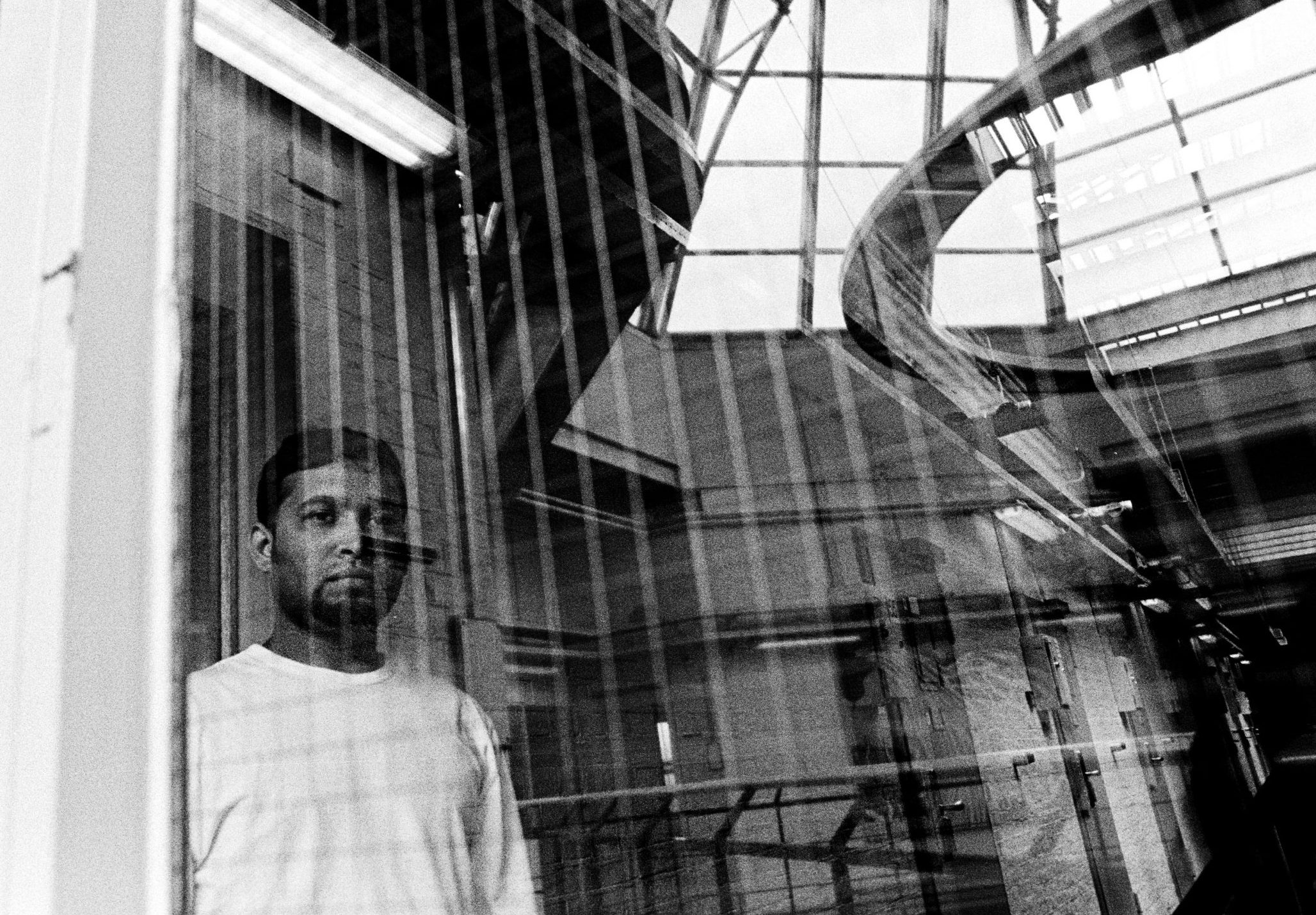
  • All pictures by Daniel Hughes- Wambuga Wa Nyingi above.

__________________________________________

‘If we are going to sin, we must sin quietly’

Four Mau Mau veterans had sued the British government over claims of torture and mutilation (castration) during the ‘emergency’. The case opened in the High Court on 7 April 2011, where, for the first time, 300 boxes of documents containing 1500 files were revealed. The accusation is that the ill-treatment was part of a system of torture, inhumane and degrading treatment applied by the security forces in the full knowledge of the Colonial Administration. The Foreign Office had argued that it was not legally liable.

In the case an unsung champion for human rights has emerged: an example of a principled whistleblower within the colonial bureaucracy who first wrote in horror to his superiors of actions committed in gross violation of every international convention governing human rights and then resigned in protest.

Unsung hero
Sir Arthur Young (15/02/07 – 20/02/79) was the Commissioner of the City of London Police from 1950 to 1971 and is regarded as one of the most distinguished senior police officers of postwar Britain. Arthur Young was an outspoken advocate of consensual and community-based policing and one of the most distinctive features of his career was as a police reformer in colonial hotspots. Young passionately believed that standards of conduct in colonial policing should be no different than that in Britain.

Young was sent on four such missions. First came a short period in the Gold Coast in 1950 preparing the blueprint for the role of the police as the colony was being prepared to become the first British territory in Africa to be granted independence. Then in 1952 he was seconded to Malaya to be Commissioner of Police during the Emergency. In 1954, Young was asked to undertake another posting to the UK’s troubled colonies – this time in Kenya as Commissioner of Police during the Mau Mau emergency.

However less than a year later Young resigned in protest at the knowledge of the complicity in widespread, systematic brutality and torture by the Kenyan security forces at the highest levels of the colonial administration. Young later provided evidence to the MPs who exposed the 1959 Hola Massacre, a major scandal which shattered popular assumptions about British colonial rule in East Africa. Arthur Young not only played a crucial role in policing the decolonisation of the British Empire, he contributed to ending it.

Maximum force
The Mau Mau emergency between 1952 and 1960 is one of the most controversial episodes in British imperial history. In response to attacks by Kikuyu Mau Mau insurgents on the farms of European settlers and police stations the colonial administration suspended the civil law and declared a State of Emergency. The Kenyan Police supported by British Army battalions conducted a series of ‘cordon and search’ operations against Kenya’s Kikuyu population combined with mass detentions of suspects. During the emergency it is estimated that nearly 150,000 people were detained in a system of camps and interrogation centres known as the ‘Pipeline’. The detainees were subjected to intensive interrogation by officers from Kenyan Police Special Branch, British Army intelligence and civilian volunteers drawn from the European settler community. The controversy over the treatment of these suspects continues to this day with continued allegations relating to the routine and brutal torture of suspects, including beatings, whippings, castration and the severe sexual abuse of both men and women.

The Kenyan Police of this period can best be described as an armed paramilitary force. It was a colonial gendarmerie that reported directly to the colony’s governor Sir Evelyn Baring. Its rank and file was composed both European and black officers but its senior officers were entirely British. The force was supported by its part time Police Reserve, drawn entirely from the European settler community. From the start of the emergency the Kenyan Police had responded to insurgent attacks with a brutality and violence that shocked many of the British Army regular soldiers assisting them. Many Kenyan Police officers felt they were entitled to use whatever methods at their disposal to fight the war against the Mau Mau and the force and, in particular, its all European Kenyan Police Reserve earned a reputation for excessive and indiscriminate violence against the Kikuyu population which the Mau Mau movement had originated

The overriding attitude of Kenya’s colonial administration was that the Mau Mau rebellion, marked as it was by horrific violence, needed to be met with maximum force and even barbaric methods. Officials at all levels held the view that Africans were simply a different kind of people to whom European standards could not be applied. Ministers in London were made fully aware of the acts of brutality. Alan Lennox-Boyd, Secretary of State for the Colonies, received a secret memorandum from Eric Griffith-Jones, Attorney General in Kenya, on the substance of these abuses and laws were enacted to legalise atrocious acts such as beatings to the point of being unconscious.

The Attorney General expressed his view that:

‘If we are going to sin, we must sin quietly’.

In effect the Kenyan Police had been given a license to abuse human rights on a massive scale. A true culture of impunity was fostered and condoned at the highest level.

An unpleasant duty
Arthur Young was appointed Commissioner of the Kenyan Police in February 1954 following growing disquiet in London at the growing evidence of widespread police indiscipline and systematic brutality and demands from the Commander of British forces in Kenya General George Erskine that the force was ‘cleaned up’. Young’s brief was to place the Kenyan Police force under disciplined control following the example he had set in Malaya and he was assured that he would receive the backing of the Governor Sir Evelyn Baring. He was to be proved wrong.

Arthur Young, upon taking his post, had repeatedly demanded ‘impartial status’ for the police insisting that it was essential to Kenya’s policing and gaining the trust of its native population. This had been rejected by Baring who refused to allow the police to operate independently of political control. Young also expressed his disgust at the conduct of many of his officers.

In his private papers Young wrote:

‘I felt it my unpleasant duty to pursue with Baring my apprehensions that members of the civilian security forces were uncontrolled and were committing crimes of violence and brutality upon their alleged enemies which were unjustified and abhorrent.’

Baring did nothing and Young again recalled in his private papers

‘I addressed a report to His Excellency expressing my apprehensions in writing with the belief that supporting evidence would soon be forthcoming. I also requested that he should take an initiative in administrative action which would indicate his own repugnance of brutality committed by the security forces and do what he could to bring this to an end. I received no acknowledgment of this appreciation, far less an answer to it, in spite of a number of reminders.’

Young provided Baring with exhaustive details of:

 ‘Many serious and revolting crimes, not infrequently with the tacit of the Administration, concerning which no reports were being received at Police Headquarters.’

Young conducted his own investigation into the ‘Pipeline’ detention camps and interrogation centres. He said to Baring in December 1954:

“[The camps] present a state of affairs so deplorable that they should be investigated without delay so that ever-increasing allegations of inhumanity and disregard for the rights of the African citizen are dealt with… . In the majority of cases the death has been caused by wilful violence and ill-treatment on the part of the staff of these screening camps and home guard posts which classifies the matter as murder.’

Less than a year after his appointment as Police Commissioner for Kenya Arthur Young personally handed his letter of resignation to Baring. In his letter Young detailed the reasons for his ‘anxiety at the continuance of the rule of fear rather than impartial justice’ by providing six detailed examples of the torture and murder of detainees by members of the security forces.

So damning an indictment of Baring’s refusal to restrain the colony’s forces of law and order was Young’s resignation letter that its publication was banned under the Official Secrets Act. Young himself was directed to return to London, retake his post as City of London Police Commissioner and remain silent about Kenya.

However questions about Young’s resignation began to be asked in both the House of Lords and the Commons and a small party of Labour MPs led by Barbara Castle travelled to Kenya to investigate the alleged abuses.

She also spoke to Arthur Young in secret. In September 1955 Castle wrote in the Tribune newspaper:

‘In the heart of the British Empire there is a police state where the rule of law has broken down, where the torture and murder of Africans by Europeans goes unpunished and where the authorities pledged to enforce justice regularly connive at its violation.’

The Young Affair became deeply polarised with liberal newspapers reporting on alleged security forces abuses and conservative papers focussed entirely on Mau Mau attacks. In March 1959 news broke of the death of 11 detainees at the Hola detention camp. At first it was reported that they had died of thirst. Then it was revealed that the 11 men had been clubbed to death by guards after they had refused to obey their orders. The incident sparked international uproar.

In July 1959, a Conservative MP during a cross party debate on Kenya excoriated the colonial administration behind the so-called Hola Massacre. Denis Healey later called the MPs attack ‘the greatest parliamentary speech I ever heard’. The peroration was perhaps the most eloquent and passionate affirmation of the case for what we would now call a universal standard of human rights even during a time of ‘Emergency’.

‘Nor can we ourselves pick and choose where and in what parts of the world we shall use this or that kind of standard. We cannot say: “We will have African standards in Africa, Asian standards in Asia and perhaps British standards here at home.” We have not that choice to make. We must be consistent with ourselves everywhere. All Government, all influence of man upon man, rests upon opinion. …. We cannot, we dare not, in Africa of all places, fall below our own highest standards in the acceptance of responsibility.’ 

The speaker was Enoch Powell MP.

Trevor Phillips has written of Powell’s contribution to the Parliamentary debate on Kenya and the Mau Mau:

‘Powell’s response is at once both philosophically profound and politically compelling. He observes that our influence in the world is utterly dependent on maintaining the highest standards in our treatment of others. And where these standards are not upheld, there must be responsibility – those in breach must be held to account.’

The growing international acceptance that Britain’s ‘civilizing mission’ in Kenya had descended into barbarism led directly to British withdrawal from East Africa. The government accepted that the Young Affair and the following Hola Massacre had hugely damaged Britain’s reputation. Britain may have won the battle against the Mau Mau but it had lost the wider war to both maintain control of Kenya and the rest of its African colonies.

(Sources: Cruel Britannia, Ian Cobain; Imperial Reckoning, Caroline Elkins; Histories of the Hanged, by David Anderson; and The private papers of Sir Arthur Young (unpublished) but are quoted in both Elkins’ and Anderson’s books; and a speech by Trevor Philips on human rights.)